Oh hey there, I′m glad you're here!

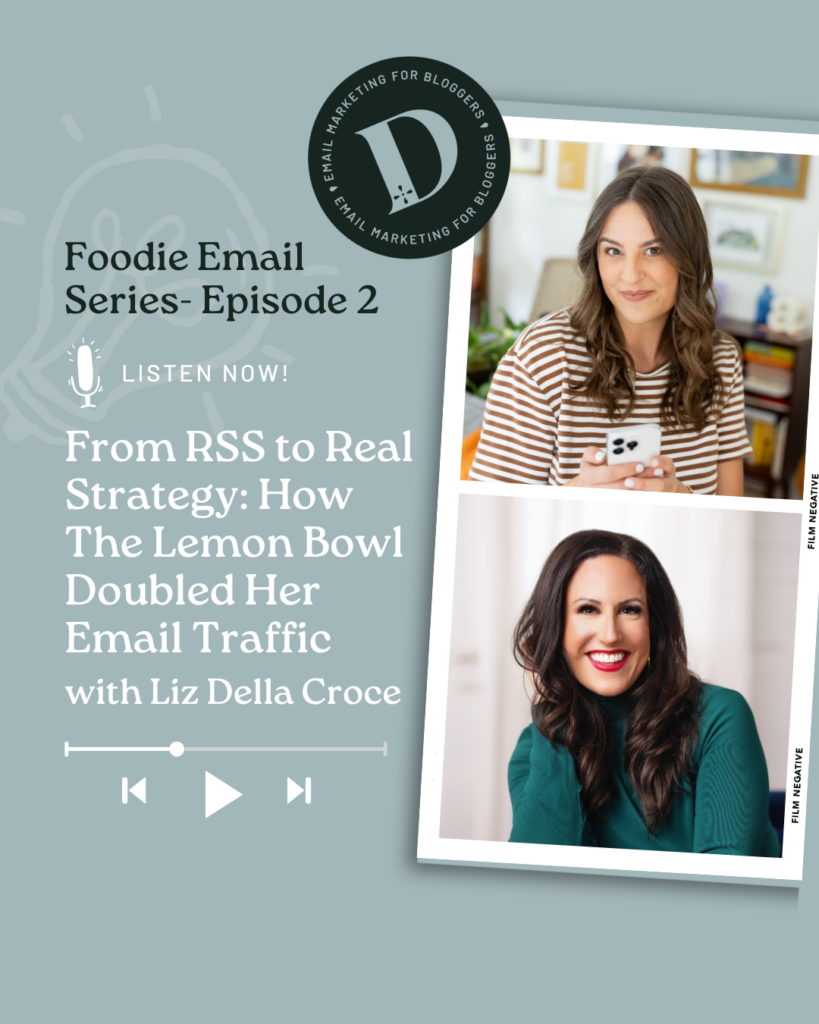
From RSS to Real Strategy: How The Lemon Bowl Doubled Her Email Traffic with Liz Della Croce

CLICK HERE FOR TRANSCRIPT
Allea Grummert (00:12)
Hey there, welcome to Happy Subscribers, a podcast that explores how bloggers and content creators can create more purposeful relationships with your audience through email marketing. I’m Allie Grummert email marketing strategist, copywriter, email platform expert, and founder of the done for you email marketing agency, Duett. I started as a personal finance blogger in 2016 and have since helped hundreds of bloggers and creators like you maximize your email marketing for more impact, more traffic, and a better connection with your subscribers. Be prepared for some advanced email talk, as well as tactical tips to help get your valuable content into the hands of your audience faster and easier. I’m excited you’re here, so let’s do it. We can create a deeper, more meaningful connection with the community you love and serve through email. Guys, welcome to the second week of the Foodie Email Series here at Happy Subscribers. I’ve got Liz De La Cruce She is the creator and author of The Lemon Bowl, a healthy food and travel blog. And since 2010, Liz has been growing a loyal following of health conscious readers from all over the world. She focuses on seasonal ingredients and whole foods, and her collection of recipes is inspired from flavors around the globe, including the Syrian and Jewish dishes of her childhood. Through eating healthy and regular exercise, also achieved long-term weight loss success and has a passion for helping others reach similar goals. I met Liz originally through people that her mastermind were talking, people I’d worked with, and they sent her to me or recommended me, and it so sweet of them. And I’ve actually been able to get some FaceTime with Liz in person at conferences like Tastemaker and MVCon. And then full disclosure, Liz and I have worked together. Not every guest on the podcast has been a previous client. just so you know, Liz and I have worked together, it was beginning of 2025, and really excited to hear what she’s up to now and share with you all kind of the before and kind of after or messy middle of her own email marketing journey. So Liz, thank you so much for being here.
Liz Della Cruce (02:19)
Thank you so much for having me. I’m super excited to connect with you. Yes, it’s been a little over a year, so it’s kind of fun to look back and see what happened.
Allea Grummert (02:27)
⁓ man. When it’s so fun because I’m like, we work together and then I kind of like send you off. And then it’s like, no, like I want the updates. I want to hear what’s happening.
Liz Della Cruce (02:38)
that has to be fun to like you’re probably curious as well.
Allea Grummert (02:40)
I’m so curious. That’s why I have a podcast. I just get to ask questions all the time. Do you remember when you were in the mastermind conversation with Molly and Jordan, what were they talking about when it came to email that kind of tripped your trigger, if you will?
Liz Della Cruce (02:57)
Yeah, I mean to be totally transparent, the biggest thing I realized was that I think I was the last person on planet solely relying on RSS. ⁓ We didn’t have, we weren’t creating emails every week. They were just really going off automatically with RSS. So we have a pretty, we had a pretty good open rate and a pretty, you know, strong list in terms of size. And I was like, Ooh, we’re probably leaving money on the table.
Allea Grummert (03:24)
Yeah. So, dear listener, if you don’t know what an RSS email is, we’re about to take you back to 1999 when it was invented. But it’s called a really, it stands for really simple syndication. And those are emails that you can set up with your blog feed or your podcast feed that send out an email based off of the content that you’re sending out. So it sends out a link. You can have it pull a photo or whatever, but it is automated. And then I think what else is really important to know is that only works if you’re creating content consistently. It’s because you’re publishing content on a blog or a podcast that then populates the email and sends it.
Liz Della Cruce (04:00)
Right. And I should also disclose the other big reason why that was ⁓ concerning is that we had also recently had an SEO audit and we discovered that it was better to update blog posts as opposed to republish them. So historically we were republishing, which was perfect. So those were going on the RSS, but if you’re only updating a post that doesn’t go out in the RSS. So I knew if we were going to no longer republish all the time, then we had to be creating emails.
Allea Grummert (04:29)
Yeah, because otherwise your list is going to get nothing. Correct. At all.
Liz Della Cruce (04:33)
So luckily we caught it, you know, before we, you know, missed that.
Allea Grummert (04:38)
You got there you got there eventually and I mean I love an RSS feed if you’ve never heard of it or You know if you’re on kit I know it that they have it and MailChimp has it as well flow desk does not But it’s such a great tool because what would you say like I mean how many years were you able to be sending emails without consciously? yeah sending emails
Liz Della Cruce (05:00)
And we still do because we do still create new content. So we still do but yeah 15 years I started in 2010 So we had been sending them for 15 years and we do whenever there’s a new blog post I think these days I publish about two to let’s say two to four posts new ones every month So we’re are still sending and those still remain some of our top opened and top page view traffic emails as well
Allea Grummert (05:28)
Yeah, I just love it. It’s automated, you know, and you know, I’ve always explained to especially sequentially when you’re getting started with email, like to turtle it and art, like let it help you as much as possible. When you’re working so hard to create the new content and you also know that email is going to be important for whenever you perhaps make the pivot to make it more personal or add in more emails. Like you can be building it in the meantime. And this is like kind of a superpower. It’s doing
Liz Della Cruce (05:39)
percent.
Totally.
Allea Grummert (05:56)
It’s taking the work you’ve already done and just broadcasting it out.
Liz Della Cruce (06:00)
Exactly.
Allea Grummert (06:02)
So Liz, how many emails a week are you sending?
Liz Della Cruce (06:05)
So we send four emails a week. And if there’s an RSS that week, then there’s five that go out because there’s also like a weekly that goes out that recaps the week.
Allea Grummert (06:15)
So like a digest. And then do each of those kind of have a different theme and like on specific days? Like how do you keep that organized so you know what you’re sending out?
Liz Della Cruce (06:18)
week four to five yeah, absolutely. So we have an email marketing calendar, similar to an editorial calendar that you might have in WordPress. And we plan out ⁓ about four to six weeks at a time. And we kind of just look ahead at seasonality, holidays, ⁓ and also just thinking about time of year and what would be most helpful for our audience and base it based on, you know, survey results, feedback, things like that.
Allea Grummert (06:58)
Yeah, I love it. then do you kind of know like which emails are a roundup? Which ones may have personal stories or is that just kind of woven in to like whatever feels best?
Liz Della Cruce (07:07)
Yeah, well, we plan all that out when we it’s kind of in the calendars like a note kind of the rough format. We kind of have our pillars of types. So for example, we sent an email out today recapping we were on spring break last week. So just kind of recapping getting back from spring break and getting back into healthy eating and just kind of meal prepping and things like that. ⁓ you know, some are more story driven. Others are more roundup style. Others are just more focused on a single recipe. And yeah, we’re always also trying new formats every month too.
Allea Grummert (07:38)
Okay, I’m so curious because I haven’t looked into the science of this because I don’t know what to Google, honestly. But like the idea that you have a content calendar planned with like a content idea and maybe also like a layout, like what’s the format of the email going to look like? What does that do for your brain? Like, explain why that’s part of your process versus I think some folks just sit down and write or they don’t know what to write at all, how has this helped you?
Liz Della Cruce (08:11)
So candidly, I’m not writing my email, so I have an email marketing assistant. And I think for her, she has to essentially have things approved by me. And I know for her, it’s really important for her to have that full approval. So I know for her, it’s been helpful to have more details included versus less and I also think it’s a it’s like a reminder for her later when she sits down to write the emails. yeah, we’re doing this one in this format or this one like this one. Sometimes we’ll even reference it could be just based on the format. We’re copying a format from a top producing email in the past. You link to that. Yeah. Replicating this email and she’ll link to it.
Allea Grummert (08:46)
Bye and then swapping out all the details. Yeah, exactly. That’s so helpful. I was just talking about this with somebody I met at my co-working space this week about how freelancers or having people on your team, they want to do such a good job, but if we don’t give them enough direction, can you imagine handing over work being like, you gave me nothing, I hope you like this. It’s cool. And so for us to give really clear direction,
Liz Della Cruce (09:16)
That’s true.
Allea Grummert (09:20)
without necessarily writing it ourselves, but giving enough direction and knowing what the final product should look like at least. It means like it’ll be formatted correctly, it’ll be in the right tone, all of this. I think that just makes life so much easier for our team members and it makes us far less frustrated.
Liz Della Cruce (09:37)
Yeah, and I come from a corporate background where there was formal training and manuals and onboarding so I’ve had folks work for me that say this is the most training I’ve ever gotten and part of it’s because I come from that world of hospitality hotel management and you know I worked for these massive companies that had lots of training onboarding so I’m just I I might almost overdo it when it comes to hiring freelancers for my much smaller company now compared to you know Marriott International but I do think it’s really important to set people up for success because they want to do a good job at their work just like we do. And if we don’t give them the tools to do that, I just think it’s not really fair to them. you know, admittedly I might go a little bit overboard, but yeah, we have training manuals and all of those things because I just really want them, you know, I want to set them up for success.
Allea Grummert (10:27)
Yeah, absolutely. And then I think it just makes like, you’re like probably one of their favorite clients, employers. I know what I’m doing for Liz and I know what she
Liz Della Cruce (10:34)
I hope so I mean, I’ve had a lot of folks working for me for over five years now. Yeah, think that that is like the goal honestly
Allea Grummert (10:47)
Can we, thank you for taking this side quest with me because I do love talking about team building because a couple of things. How do I organize my thoughts? One being, what does that allow you to spend your time doing? Start there.
Liz Della Cruce (11:01)
So for me, I’m a salesperson at the heart. So I love selling. love relationship building. I’ve been in the business for it’ll be 16 years in June. So I’ve met so many great people over the years and I really love fostering those connections and building upon them. And that’s really my creative genius zone. I don’t love, for example, filming content. I don’t love editing videos, scheduling pins, editing photos. I really love to cook and I really love you know, building relationships and selling because I think that a lot of what I, what I offer is a great solution for a lot of brands between either my retreat or the lemon bowl. And I’m really passionate about what I do. And so for me, selling is just like, it’s second nature to me. ⁓ And so for me, if I’m taking time away from selling, that’s not going to benefit the best.
Allea Grummert (11:55)
Right. And I forgot to mention your retreat in your bio. Do you want to tell people about the retreat? Yeah.
Liz Della Cruce (12:01)
So I host two retreats annually called Fresh Air Retreat. This ⁓ actually later in a couple of weeks is my 15th retreat in Atlanta. so it’s really fun. know, being kind of a veteran in the industry, I noticed early on there was a huge opportunity and basically a gap in the industry where conferences could not fill it because essentially it’s really tricky for conferences to grow at the pace of the industry and so what was happening is that I was ⁓ investing a ton of money, traveling, registration, meals, flights to attend these conferences. But I wasn’t quite getting back what I was investing and neither were the brands that were sponsoring it. And I was like, but there were so many great things about the conference, like the offsite dinners and then the small little chitchats around the water, like our lunch at the Mediavine conference. Like those little small things were so valuable, partly because it was a two way conversation. Whereas when you’re just listening to someone on stage, it’s a one way conversation. And long story short, I created these retreats in a home. Because the other thing I noticed is that we were talking about food and meeting all these food brands in a conference center without tasting the food, trying the food, touching the food. There were no kitchens. We weren’t cooking. So we’re recipe developers at the heart. if we’re going to have a brand sponsor that’s a food product, I feel like it’d be really smart for the attendees to taste the food, try the food, so we do it in a private home. They’re really intimate and I feel like they are super valuable for both the attendees. And it’s also free for influencers to attend. So the value is huge there. Yeah. There you go. That’s it. Yeah. 15 retreats later. So it’s a huge part of my business now.
Allea Grummert (13:38)
Yeah, absolutely. I love it. What a pro. yeah, having somebody else scheduling your pins and, you know, organizing your email content and getting it planned and making sure it gets sent. This is like, if you could give me like two sentences of like, what’s your, what would be your advice for the creator who is afraid to outsource? I don’t know. I don’t know what you’re hearing from your friends. Is it cost? Is it, it’s not going to be done super well? Like, what do you feel like the pain point is?
Liz Della Cruce (14:11)
I honestly think I know. The truth of the matter is most of us don’t have any professional training in hiring an onboard. And I know for me, what really helped was I took a course and I don’t do a lot of courses. I think a lot of them are a bit of a waste of time and money. And sometimes we spend so much time learning versus doing. I much prefer to do. So long story short, I took a course on how to be a CEO of my company and that included hiring and firing and all that stuff. And I think it’s really important to have the right tools to hire. And then it gives you the confidence in the future to delegate. really think nobody, I think most people are down with the idea of letting someone else do the work. I think they get overwhelmed with hiring or they’ve been burned with hiring the wrong person and then they leave or it doesn’t work out and a lot of that just comes down to you probably hired the wrong person. tend to hire people that we think are fun and we want to hang out with. The reality is we need to hire people that are different than us that have different skills and different strengths and weaknesses. So they may not look like your bestie. And so it’s going to, I just think that’s like a quick little hiring tip, but I it comes down to hiring. I think people are daunted and they’ve been burnt by it. Yeah.
Allea Grummert (15:27)
It’s a whole different skill set.
Liz Della Cruce (15:29)
And I had, trust me, I had to learn it myself as well. But once I did, it was worth it because now I have my first hire that I made after that course is still with me six years later.
Allea Grummert (15:38)
I love it. And then like, I mean, it feels like a superpower, doesn’t it, Liz? Like now that you’ve like, once you’ve done it, you’re like, I can do it again.
Liz Della Cruce (15:47)
I’ve definitely you know, there’s no there’s no ⁓ You know hundred money back guarantee when you hire people but yeah, it’s just it’s I think it’s it’s tricky to it’s a it’s whole skill It’s a whole skill that’s different from everything else that we’re doing and the problem is it’s a lot of time and energy and money to train and onboard someone So if you don’t invest in learning how to properly hire you’re just gonna be wasting money
Allea Grummert (16:15)
Yeah, I agree. And now, speaking of hiring people, why did you want to hire me? I’m curious because I’m all I mean, we can also be besties. But when you bring someone into your business, I know, like email is all I do. And so I wonder if that was encouraging for you. But I say that because we’ve seen the trickle down from that. once you hired me, then you brought on a team member, then you gave them clear direction and now email is the steady part of your business. But like there’s a decision to say I’m someone into my business and it’s not always cheap to bring in a specialist. But yeah, walk me through that process. Yeah.
Liz Della Cruce (16:56)
It’s because Molly told me to. No, I’m kidding. But generally speaking, if Molly recommends it, we’re talking about Molly, what Molly made, she’s amazing. But she was having a ton of success with her email. So I trusted that initial recommendation. And then the other reason is that I wanted, I knew I wanted to hire someone, but I knew that I didn’t have the proper updated tools to guide them. So I knew I wanted to hire you before I then hired somebody else. I wasn’t going to go the other way around. So I honestly hired you because I wanted to delegate email, but I wanted to have a roadmap to do it.
Allea Grummert (17:32)
Right. Love it. Well, I don’t know if you remember when you got the playbook in your inbox. It’s a it’s a massive comprehensive audit of what you’re doing. But what what stood out to you at that point? Right. Because I mean, you weren’t at square zero. You were doing RSS and you’d been growing your list. But were there things that stood out to you?
Liz Della Cruce (17:54)
I mean, to be honest, was, was the funny thing is it was really more common sense than I, it was like pretty obvious, like, oh my God, you should update the landing page list or, your RSS is so outdated, like freshen it up. So much of it, I think sometimes, to be honest, what really stood out to me is, and in fact, it was the start of me hiring people right around that same time. I realized I wanted to hire specialists as opposed to an assistant that does a lot of different things. So from there, I hired an email person and then I hired a Facebook person. Whereas I used to have one person doing a lot of different things. it, cause it really, when you sent that to me, I literally thought to myself, if I could spend all of my time thinking on just email, I would have done all this already. And how smart is it? This is all common sense. Nothing you’ve sent compared to like we had done an SEO audit two months prior where none of it made sense to me. This was all. So obvious, so easy. And I say that to people so they’re not overwhelmed or daunted to hire you because I know a lot of people don’t hire audits of any kind because they don’t want the work that comes with it. Because we all know you didn’t necessarily do the work. You did an audit, but we have to implement all. It’ll be nothing if we don’t implement everything and do it long term, but nothing you write your audit with so much more users. I mean, let’s be real. MailerLite is like Canva. Like it’s super easy and friendly. So I just was like, ⁓ God, to think about email only would be so amazing. And then I was impressed with your business. But I think it’s just, I do think there’s some value to focusing on one area versus trying to be really good at everything does not, in my opinion, it doesn’t really end.
Allea Grummert (19:34)
Yeah, I am curious. man. Yes. Well, I’m glad that I’m glad that it was clear because it covers a lot. So y’all inside of the email strategy playbook, we look at how people are joining your list and what their experiences, how you’re getting people on your list, where and where your forms are not living and what your automations look like, how they’re operating. We look at like the copy. We look at the formatting and the technical piece. We look at gosh, also what we would recommend. setting up any automation. So have you set up any automations from the emails that you’re writing?
Liz Della Cruce (20:10)
Already got a welcome sequence. Is that an automation? Yes, so we redid it. We updated I think we I think now it’s a little bit longer So we redid our whole welcome sequence and that was a really big again, though I was like, duh, like why didn’t we do this before? So I appreciate that it wasn’t so like what where she why is she suggesting like nothing didn’t make sense And it’s nice. I think sometimes when you’ve been in business for a long time like I have to kind of bring in those outside experts to really make you just honestly like go back to basics. ⁓ So anyways, yeah, was the welcome sequence was our biggest automation that we redid. And then we have certain, you know, lead magnets and things like that, that we freshened up. But ours isn’t super, super intricate. Like we don’t have a million different pathways, but.
Allea Grummert (21:01)
No, and you don’t necessarily need that. just need it to be. Like, I’m sure that our edits to your welcome sequence, it’s been a while since I wrote that. The old ones, but like a lot of it is updating it. And so when you share with us, like what’s important to your business, what you want people to feel, and we take that and we read your welcome sequence, the current one you have, and we’re like, well, this is missing and this is missing and this is missing. It’s not that you’ve failed, it’s just that it hasn’t been updated as your business has shifted. And so, and then I would like.
Y’all all I do is email. So our playbook is really like it’s detailed. It’s the whole schmink. So while it feels kind of obvious, it’s like you also get a document with all of the notes in it. So yeah, were you one of my clients? love it when clients show up and it’s printed out. They’re like, took notes.
Liz Della Cruce (21:41)
Definitely printed it because my husband did part of it and I did part of it and then we had an assistant So yeah, it was we like worked through it and it it takes time But a lot of it is a one-time thing, which is nice, you know It’s not all things you have to do every day. Like when you do an SEO audit, you’ve got to now update 1500 files So that ⁓ this was a lot easier to execute. Yeah, which is nice
Allea Grummert (22:13)
So Liz, I’m so curious, spill the tea with me, because you’re like, what drama? No, not drama, but I’m curious because I will often have people come to me and they’re either about to get an SEO audit or they’re like kind of dealing with both at the same time and maybe even a site redesign. Where does email marketing fall for like a creator in terms of like, it really still is important to do? Where’s the hierarchy of that? That’s a lot to do at once. Yeah. Yeah.
Liz Della Cruce (22:45)
The reality of it is that you’re of course going to most people are getting more traffic from Google than email, you know, I mean email is still a small portion of traffic just because we get so much traffic from Google. Right. And so much even like Facebook’s outpacing email quite a bit. I hate to say it, which I only say that because like I like Facebook had a research. So I think we’re all like in shock.
Allea Grummert (23:09)
Yes they did.
Liz Della Cruce (23:14)
Whereas like Pinterest on the other hand, at least for me and most folks I know has gone way down. ⁓ But I will say, you know, I think the biggest thing with email, unlike anything else is you completely own and control your list. So 100 % of your list gets your emails, whereas 100 % of my Facebook followers don’t see it based on an algorithm that I can’t control. Same thing with Instagram. So I think it’s really important to have a strong email marketing strategy. But I can’t say it’s, you know, I do also think in SEO that’s important and other things are important as well. They all, they all do go hand in hand and you know, you also don’t know what’s going to pop off. If I had just pieced down on Facebook, I would be missing out on tons of money and traffic right now that I didn’t, that had kind of been dormant for years. Same thing like with right now, I’m not piecing out on Pinterest, even though it’s way down, because you just don’t know. Things are always evolving in my 15 years in the industry. Just things come and go and go up and down. ⁓ But I think at the end of the day, the email is a big reflection of your brand. And I know the folks that subscribe to my email are heavy Lemon Bowl fans. They love Liz. They love my family, my story, my Lebanese food. So it’s really important for me to make my emails as helpful and useful for my audience as possible, because these are folks that like really follow me and know me well.
Allea Grummert (24:41)
Yeah. Tell me how you’ve developed that relationship with people.
Liz Della Cruce (24:46)
True. So I think the biggest thing for me is I reply to every comment, every email, everything I’ve ever received. And I always have. I’ve really vowed, know, short of me becoming Rachel Ray, there’s no reason why I can’t respond to people. They’ve taken the time to comment or to reply to an email. So we’re really responsive and communicative. Yeah. I’m a zero inbox person, so I’ll probably respond quickly. I love that. Yeah. So I write, I mean, we email, we write back and I think people know and appreciate that about me because a lot of, you know, Candle, I’ll hear, ⁓ no one ever writes me back. And I get it. Like I’m not the largest influencer. So I, there’s no shade to people that don’t respond, but we don’t have any reason not to. And I think it’s the best way at the end of the day, we’re here because of our community and I am a hyper extrovert hence like plan events in person. Like I really believe in community. So for me, that’s like one of my pillars of my brand is community connection.
Allea Grummert (25:47)
of that. Tell me about the changes you made to your welcome sequence. Do you think that that had any like, I’m curious that people are replying to those emails? Yeah. Where the relationship
Liz Della Cruce (25:59)
I’m not getting a ton of replies to those per se I thought I would get more because our list has grown quite a bit So we are bringing on tons of new subscribers every day. I don’t get a ton a ton of replies So I’m just gonna be totally honest about that I think the biggest thing for me was it was almost more so Modernizing the look and layout because as you can imagine like just like how we’re updating all of our photography. It’s it just looked outdated and so I think now we actually, our email assistant is actually a professional graphic designer. So now things just look better. They look more modern, more with, always joke like, yeah, I don’t want things to look like an eighth grade PowerPoint. That’s like my, I have an eighth grader now too. So that joke’s even funnier. His PowerPoint’s a lot fancier now thanks to AI, but you get the vibe. Like it just had to be freshened up, but I will say nothing. My brand is, is pretty strong and true. And it’s, it’s, it is. It’s pretty constant and consistent. So ⁓ the pillars didn’t really change. We just had to really freshen up the look and layout, if I’m being honest.
Allea Grummert (27:03)
Yeah, I’m curious because whenever we write for clients, so like past the playbook when we could do like the whole duet debut for clients, what we’re doing is we would take in some audience research, we figure out what people love, but we’re really trying to figure out like what is the unique selling proposition. It’s like to use an advertising term, USP or like what is your unique angle? And how do we not just, I mean, it’s really easy to put that into a welcome sequence. Like every email is like strong on Syrian and Lebanese food and your story, all this. And then we try and keep it top of mind for the other emails that we’re writing for the automations that follow. I’m curious how you are weaving in Liz, the one that everyone knows and loves, into your regular emails.
Liz Della Cruce (27:51)
Yeah, so, you know, it’s certainly not rocket science. So my assistant follows me on social. So she’ll just snag like iPhone photos, personal pics. So we were on spring break last week and she just grabbed some photos and then kind of wrote the story. You know, I think the biggest thing is anyone working for you, they’re speaking as you. So it’s important that they’re really following you because I do all my own Instagram and things like that. So she just kind of talks like me because she follows me since she studies me and knows how I talk and what I write when I’m up to. So it just naturally happens that way. So you really want to make sure your team members are really engaged, like really true fans of the brand, like passionate about it genuinely. Like, for example, when we put an affiliate link for a product, she’s like, by the way, I just put these in my Amazon cart. Like we’re genuinely, we’re not just like making these things up. Like we, ⁓ you know, again, like nothing in email is worth like, it’s not like that valuable that we would like make something up to get like a couple cents on like an affiliate link. So it’s only going to be things that we’re, really care about.
Allea Grummert (29:00)
Right. What I love that your email marketing person is not completely siloed from your brand. So even just that strategy of like follow along or ⁓ my team members, have them on like WhatsApp or on iMessage or whatever. And that’s where we share more of the personal stuff. Like here’s my cat. And we also have Slack for like our more busy things. But even my
Liz Della Cruce (29:14)
yeah, we’re on a team.
Allea Grummert (29:25)
My new marketing person texted me saying, can we get a video of this? I was like, yes, thank you for prompting me. Staying in the loop. Yeah.
Liz Della Cruce (29:30)
Exactly. Yeah, being proactive. think finding proactive team players is key. ⁓ Like she’s often coming to me with ideas. And I think when you are hiring, it’s helpful to find someone that presents ideas to you, because I don’t want to claim to be the expert in everything. So I would rather have someone like in general, if you’re hiring someone, they should be better than you. So that means they’re probably going to come to you with ideas versus them just asking you what to do.
Allea Grummert (29:58)
Right. And I think that even if you’re getting started and you don’t can’t hire like the utmost expert, finding someone who has an eagerness to learn. then with time as a leader, you get to give them that permission of like, no, Sydney, I want to hear your thoughts. ⁓ know, so and I.
Liz Della Cruce (30:14)
100%. Have to empower your team. That’s a good point right there because I think some people like they want to present ideas, but they’re worried about how they’ll be taken.
Allea Grummert (30:25)
Yes. Yep. And being able to receive those ideas and applaud them for sharing. But it is kind of like opening up the space. And it’s interesting because, I mean, I studied marketing. I am the expert on the team. Yeah, I am the expert for how we’re going to market Duett. But that doesn’t mean I don’t want to hear your ideas. 100%. So there’s a certain, I think if I didn’t say that verbally, they might be assuming that. Right. Well, why would I take, why would I don’t know. So I’ve been really grateful to hire the right people who stick around and ask questions and advocate for my for my business, but also for my clients. Like, oh, man, hiring the best people. It does well, as I am curious, just kind of wrapping up, what do you feel like have been the biggest change in results for your business in the last year since you did the playbook, you hired a person? Where have you been seeing the results?
Liz Della Cruce (31:06)
It makes a difference. Email specifically. Yeah. Yeah. Yeah. I mean, I’m happy to say our we just did our Q1 numbers. Our email traffic is up 100 % over last year. It was like 100.4%. Oh, yeah. So fun that it was like 100. Yeah. So it’s been a huge impact. I think really just transitioning from just RSS to curating emails that really, you know, capture the moment. Even just doing, we’ve done reader surveys now twice since then. Yes. And just making sure our content is as helpful, as useful as possible. just can’t overstate that enough.
Allea Grummert (32:04)
as useful as possible. What does that look like?
Liz Della Cruce (32:08)
So for us, it’s really about understanding our audience and their needs. know, for example, we tried meal plans and they were total bust. And then the minute we stopped them, our traffic went way up. And I think oftentimes in this industry, we do what everyone else is doing because we think we’re supposed to or that we should be doing something. But I think it’s really important, even if you’re in like a mastermind or you’re in group chats with people, you go to a conference, understanding your own community and your own business. Really really important. You shouldn’t just be doing something because someone else is doing it and I know for me my my email list is a lot of empty nesters so they are not making weekly meal plans or grocery shopping for a week to feed four people five days a week so that was really Understanding that your email audience is different than your Instagram audience, which is a lot younger versus Facebook So I think that is just super super
Allea Grummert (33:04)
I love that. Like, I mean, that’s why we call it happy subscribers. That’s why we do audience research to make sure that we actually know what people want and that we’re sending them the right things. sounds really, it sounds really basic. But, know, oftentimes email can feel like a back burner task or you do, you just kind of duplicate whatever you’re sharing somewhere else. But we have such an opportunity to learn about and connect with this part of your overall audience in a really unique way.
Liz Della Cruce (33:33)
Yeah. And you know, for example, we didn’t do gift guides this year. I just don’t think that was the right thing for our email list. And so for me, we did a lot better just by giving them, you know, the recipes that they needed for the season. That was just much more beneficial and profitable than a bunch of affiliate links that they just weren’t clicking.
Allea Grummert (33:53)
And then it saves you time and energy. You’re like, we experimented. We’ve said no.
Liz Della Cruce (34:00)
think stopping things you’ve started is really.
Allea Grummert (34:04)
Yeah, taking a real audit and like…
Liz Della Cruce (34:06)
Exactly don’t just keep doing things because it’s part of your check
Allea Grummert (34:11)
Yeah. And that means a lot coming from you, Liz, how long you’ve been in the industry to say that. Because if you kept doing everything and just kept doing more and more and more, boy, that would be exhausting.
Liz Della Cruce (34:20)
Right. It is and I think we all share what we’re doing, but people don’t talk about what they’ve stopped doing. I think it’s really important to have like a daily, it’s like a checklist. Like what am I not doing today? That’s no longer serving me.
Allea Grummert (34:34)
Yes, I’ve done an end of year kind of reflection survey and that’s one of the questions is like, or like what is no longer serving me that I can’t let go of just give me your
Liz Della Cruce (34:43)
something that you’ve stopped doing, Allea. So come on, let’s Google tippity on here from Ali. What’s something that you stopped or sunsetted that was no longer serving you, your business, your team, your customers.
Allea Grummert (34:57)
my goodness. mean, a big example was this time last year, I took like six months as like kind of a personal Sabbath of sorts. Like what can I do that’s the minimum in my business? Like I had a team member going on maternity leave and I had somebody else to train. So was like, I need to be present for that. I was dating somebody who lived in a different city and I was like, what if for like six months I’m not starting any new marketing projects? Like, I think the most I did was the foodie email series in the spring, but like, I wasn’t creating new products. I wasn’t creating new webinars. It was like, what if I just rest? And there was something about it being my seventh year in business, which is like the Sabbath year. I’m just like, what if I trust the process? And then like, you know, a big partnership comes out that like I’ve been working on for over a year, like things.
Liz Della Cruce (35:42)
Breath. Yeah.
Allea Grummert (35:50)
So part of it is like letting the things that you’ve done grow while you personally can take a mental break. And so that was a big ask for me.
Liz Della Cruce (36:00)
you for doing that. I know it’s hard for ambitious folks, but I think you have to really have the confidence.
Allea Grummert (36:03)
It is so hard. Yeah. And, you know, and having friends who are confident saying like, Allea, you’ve already put in so much work to train your team, you know, and to show up in the food blogging community and all of this. And I’d already I just started the podcast. I’m like, what if I’m just consistent with what I’ve said I’m going to do? And I don’t feel like I have to do more because when you do more like it just it requires more of your brain, obviously. But then you have to train a team member and you have to double check everything. And it was like, what if I didn’t? And, you know, part of my reasoning is like, I want to be in business for a long time. And I need to take care of myself. And six months is not forever. And that doesn’t mean I’m not doing my work. It’s just like, you know, and it all works out and I’m a happier person. Like, yeah, it also showed me that I can trust that what I’ve built in my business can be sufficient. So I don’t always need to be creative.
Liz Della Cruce (36:45)
Worked out. How do you? Even ambitious people take breaks.
Allea Grummert (37:00)
You heard it here. Liz, thank you so much for your time. Before you sign off, where can people learn more and connect with you about your work?
Liz Della Cruce (37:12)
Of course subscribe to my email But you can find me everywhere at the lemon bowl all the places Facebook Pinterest Instagram you name and I’m there but yeah, definitely though if you I’m a visual so one thing that’s helped me is subscribing to other people’s emails, so Absolutely would love you to subscribe and check it out. I won’t be offended if you unsubscribe We’re often culling our list because it’s so expensive
Allea Grummert (37:14)
At thelemonbowl.com It is. Yeah, it’s crazy. like, engage or get out. Engage or get out.
Liz Della Cruce (37:46)
But long story short, everywhere in the lemon ball.
Allea Grummert (37:48)
Very cool. And then if they’re interested in the Fresh Air retreats.
Liz Della Cruce (37:51)
Yes, so we have an Instagram account at fresh air retreat and there’s an application and you can apply and right now we are taking applications for Austin which will be in September.
Allea Grummert (38:02)
Let’s go. I love it, Liz. Thank you so much for sharing the inside thoughts and activities going on behind your brand. appreciate your transparency and all that. know that it’s listeners. Thank you so much, Liz. Thank you so much for listening to this episode with Liz.
Liz Della Cruce (38:14)
time.
Allea Grummert (38:21)
As you heard, Liz worked with me and my team to complete an email strategy playbook. And that is where we audit your existing email marketing. If you’ve been sending emails, even like in Liz’s case, sending RSS emails for a while, whether or not you have a welcome sequence, whether or not you think you’ve shared your forms in the best places, those are the things that we will look at and give you direct and specific feedback on. The report ends up being 30 some pages long. And it’ll give you a to-do list of things to improve in your own email marketing strategy and your copywriting, how you’re attracting subscribers and converting them to be subscribers to your list. If you’ve completed the playbook and you want more support, we have what’s called the duet debut. And the playbook is actually the very first step of the duet debut. We always start there. Then we dive into audience research learning about your audience, what it is that they want from you, what their pain points are, and how we can deliver the most value and support to them as soon as they join your email list. As we write your welcome sequence and your nurture automations or whatever automations we come up with, it is a custom strategy for you. We write the emails for you for that automation. We set it up for you in whatever email platform you’re in. And we turn it all live, introduce your existing subscribers to your new content and make sure that all of your new subscribers get the content as soon as they subscribe. So if you’re interested in learning about either or both of these services and you want to hop on a call with me, you can do that at duett.co/contact. Thanks so much for listening to happy subscribers and our conversation about email marketing today. I hope you feel inspired to take action, even if it’s a small change, so you can more confidently share your valuable message with your community through email. Special thanks goes to my team who makes it possible to produce and share these episodes with you. Seriously, thank you guys. If you want to hear more email marketing tips, strategies, and success stories to help you develop deeper, more meaningful relationships with your email subscribers, be sure to subscribe to happy subscribers so you don’t this an episode. If you have a few seconds, I invite you to share this episode link with a friend or post it on social media so your peers and community can benefit from it as well. And if you have a few minutes, I’d appreciate if you’d leave a written review of the podcast since that helps more people hear about it and I believe we need more creators sending more valuable emails to their audience with more confidence. If you want to reach out to me directly, the best way to do that is to join my email list through one of my top freebies listed in the show notes. You’ll get regular emails from me that are packed with value and if you hit reply to any of those emails it’ll land in my inbox and I can’t wait to chat with you there. Until next time, let’s Duett!
100% email traffic growth. In one year.
That’s what happened for Liz Della Croce of The Lemon Bowl after 15 years of sending nothing but RSS emails — and it’s exactly why I wanted her on the podcast.
I just started personal training — and I went from finding out about the gym to having my first session on the calendar in under a week. There’s something about committing to the right kind of help — and actually getting it scheduled — that makes all the difference between “I should do this” and actually doing it.
I think this happens in business too: we know something needs to change, but we stall on the whole plan before taking the first step.
My guest today, Liz Della Croce of The Lemon Bowl, knew her email marketing needed an overhaul — and just like me at that gym, she committed to getting the right help before she had everything figured out.
Liz has been building The Lemon Bowl since 2010 — a healthy food and travel blog with a loyal community of readers drawn to seasonal, globally-inspired recipes, including the Syrian and Jewish dishes from her childhood. She also hosts Fresh Air Retreat, intimate brand-and-blogger events she’s now run 15 times. In this episode — week 2 of the Foodie Email Series — she’s walking us through exactly how she got here.
In this episode we discuss:
- Why Liz sent RSS-only emails for 15 years — and the SEO pivot that made them not-so-useful overnight
- The email calendar system behind sending 4 to 5 emails a week — and why giving your email person clear direction changes the quality of everything (including your peace of mind)
- Why she got the Email Strategy Playbook BEFORE hiring an email assistant — and how having a roadmap first changed the way she now delegates
- What she stopped creating for her email list, why she made those calls, and how she figured out what actually got more engagement
- The result: 100% email traffic growth in one year
Episode Resources:
- The Lemon Bowl
- Fresh Air Retreat
- Kit
- Book a FREE Discovery Call
- Free Duett Resources
- Join the Duett newsletter
- Instagram @alleagrummert
Revisit other Foodie Email Series episodes

Subscribe & leave a review!
If you enjoyed this episode, you can show your support by leaving a review, subscribing, or sharing your biggest takeaways on your Instagram story! Just remember to tag me @alleagrummert so I can see it.
Subscribe on Apple Podcasts or Spotify

About Allea

Allea Grummert is an email marketing strategist, copywriter and tech expert who helps bloggers and content creators make a lasting first impression through automated welcome & nurture sequences. She helps her clients build intentional email strategies that engage readers, build brand loyalty and optimize conversions for sales and site traffic.
Allea is the host of the Happy Subscribers podcast, holds the coveted spot as the email marketing industry expert for the Food Blogger Pro membership community, is a Recommended Expert through NerdPress, a trusted Mediavine partner and recognized as a Kit Approved Expert.

Looking for more ways I can help you?
Book a free call with me (no-pressure zone, promise!) and we’ll chat more about what would benefit your business most in this season.

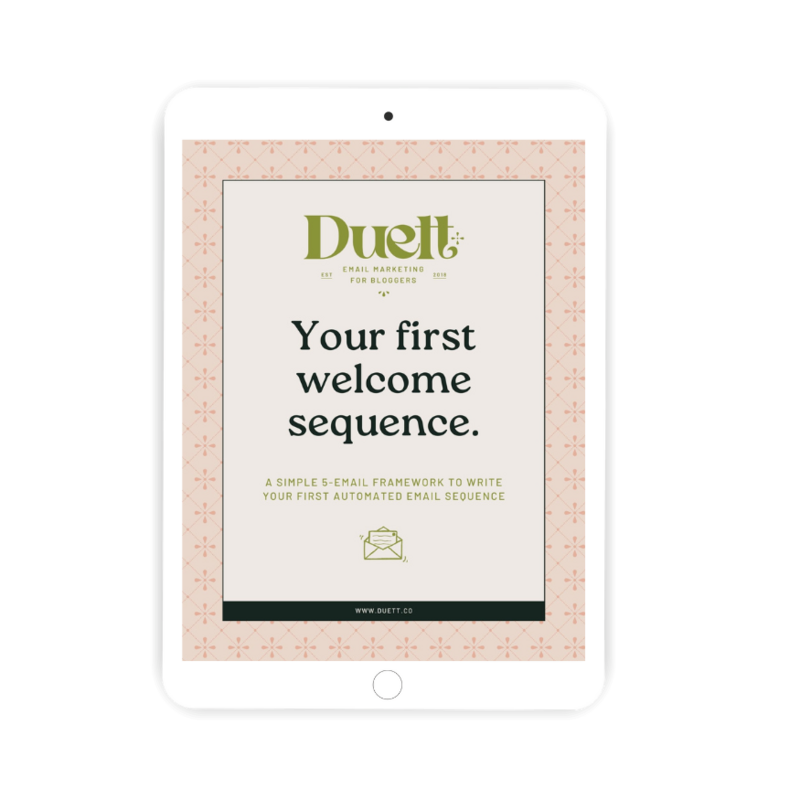
If you’re not welcoming new subscribers and pointing them in the direction of your best, most beloved content — or you feel like the one you have isn’t doing the trick — it’s time we fix that. Use this free 5-part framework to make a meaningful & lasting first impression as you write your first welcome sequence for new email subscribers!
Is Your Welcome Sequence Making a Lasting First Impression?