Oh hey there, I′m glad you're here!

Affiliate Links, Pixels & Privacy Policies: What This Lawyer Wants Creators to Know

Click here for transcript
Allea Grummert (00:12):
Be there. Welcome to Happy Subscribers, a podcast that explores how bloggers and content creators can create more purposeful relationships with your audience through email marketing. I’m Ali Grimer, email marketing strategist, copywriter, email platform expert and founder of the Done for You email marketing agency duet. I started as a personal finance blogger in 2016 and have since helped hundreds of bloggers and creators like you maximize your email marketing for more impact, more traffic, and a better connection with your subscribers. Be prepared for some advanced email talk as well as tactical tips to help get your valuable content into the hands of your audience faster and easier. I’m excited you’re here, so let’s do it. We can create a deeper, more meaningful connection with the community you love and serve through email.
(00:57):
I want to get more strategic with your email marketing. Every month I host a few free 15 minute coaching calls for bloggers and content creators who want to make better use of their email list, whether that means growing it more intentionally, making the most of the emails you’re already sending, or finally connecting the dots inside of your email platform. It’s a low pressure, high impact. Chat with me so that I can help you get clear on what you really want your list to be doing for your business. We’ll also uncover maybe what’s getting in the way right now and identify one next step that you can take to feel more confident and in control of your email marketing when you show up for this coaching call. You don’t need to prep, you don’t even need to know all the lingo. You just need to be ready to think about your email a little bit more intentionally.
(01:42):
If that sounds like what you need, apply for your free call at duet co slash apply. We’ll talk one-on-one about your email strategy and your game plan to reach those traffic and revenue goals with email. Again, that’s duet dtt co slash apply. It’s a one question application and I look forward to seeing yours land in my inbox. Brittany Rattel is a creator lawyer, AKA, the find princess, PRNT, and she protects online entrepreneurs. She believes in the power of Q Office supplies and good contracts and shares snackable legal tips to help founders keep the plot twists out of their inbox. She’s also the founder of Creative Contracts at DIY Legal Resource Shop. Freddy, I’m so glad you’re here.
Brittany Ratelle (02:28):
I’m so excited to be here, Allie, thank you so much for having me.
Allea Grummert (02:31):
You are so welcome. I was just complimenting Brittany on the Fine Princess. I think it’s so clever and you should also know if you’re listening to this and you cannot see her, she has a leopard print background with what does it say behind you? Legally Legit. It’s
Brittany Ratelle (02:46):
Legit. It’s going to be backwards, but yeah, my sister gave that to me. One of my favorite phrases is like, Hey, you got to get legally legit with Brit. I love a good rhyme, obviously I love a good pun. And then this is Paper Art of Scales on lips that I got from an Etsy client of mine. So she was like, Hey, could we do a trade? And times were tough for her, and I was like, absolutely. We can make that work. So I love it. That’s part of my office now,
Allea Grummert (03:13):
Your office, you’re like little Aura brand right behind you. I love it. So as you guys can tell, while Pretty is a lawyer, she’s silly fun. You’re going to enjoy this conversation and I’m excited to have her here. We met through Mike Sy Lanka, who is a friend of mine in the food blogging space. He introduced us and was like, you too, you too. Get along great.
Brittany Ratelle (03:39):
I got to make this happen. So thank you. Shout out to Mike who’s an awesome COO and tech guy and he supports a few of clients who are now also my clients. I
Allea Grummert (03:51):
Love that. Well, we can include the episode I did with Mike in the show notes. If y’all want to go, listen, it’ll be worth your time. It’s such a great interview. Mike is full of so much wisdom. Before we dive in, is there anything I didn’t share in your bio that you think would be helpful for listeners to know about you?
Brittany Ratelle (04:10):
I’m a mama four, so yeah, which I love. I’m an avid romance romantic reader, which I always think is really important for anyone who’s bookstagram or book talk girly out there. I’ve been in this space helping people for a decade now, which has been amazing and no, it’s not something I went to law school for or knew I was going to do. Literally this practice area did not exist, right? Yes, in terms of helping creators or helping influencers or online business owners, but I’m so, so lucky and just grateful and blessed that this is my job now and I get to support and just be people’s lawyer and be in their back pocket, help keep ’em out of trouble. So I love
Allea Grummert (04:49):
That we’re going to dive into some of that trouble. I was like, Brittany, you can bring the horror stories. Tell us what we don’t know. I was telling her that I don’t need to know these things and I live in blissful ignorance of like, I’m sure my business is fine, my website is fine. I mean, I have had attorneys help me with my client contracts, but there’s so much more to it. And so I’m really excited for you to reveal that to us kindly slowly.
Brittany Ratelle (05:20):
We do our best
Allea Grummert (05:21):
Because
Brittany Ratelle (05:21):
A balance, I always say to people, I ideally want to be more of your cool yoga teacher, like chiropractor wellness, get you to take your vitamins and drink your water or whatever because I don’t love being people’s ER doctor. I will do it and I will show up, but the options aren’t great because we already have a problem in our face and it’s stressful and it’s probably going to cost something in terms of time, money, passion, profits or whatnot. And so ideally we integrate legal earlier than a lot of times people think into their business and it does help protect you. It helps protect your boundaries, your peace, because there are crazy clients out there. There are messed up vendors who might not have thought through their processes and might try to screw you and yeah, there are shark lawyers out there in the waters that we need to consider because you are running an online business and so we need to make sure that you’re protected, right, and you don’t look like a juicy target. And we’ll get into that of what that looks like.
Allea Grummert (06:18):
Yes. Thinking about the sequence of somebody in their online business career are there, what’s the order of sequence of things? Maybe just start with earlier on, we can kind of broad stroke it kind of order of
Brittany Ratelle (06:34):
Operations. So I generally tell people the steps that you can take or that you should kind of get your foundation legit. And so that’s kind of your first step. And so generally for most people that’s setting up that business. So setting up or registering as an LLC, getting a business bank account, getting an EIN, all those things should match and that’s really the right order to do it is L-L-C-E-I-N business bank account. All business money goes into that account. All business expenses go out of that account because it’s a hybrid legal and accounting question and you will make your life so much easier, especially when it comes time to do bookkeeping and taxes because you’ll kept everything clean and legally, a lot of people don’t realize this. If you set up an LLC but you don’t use it, right, meaning you don’t separate your money or you are not signing contracts and entering into business on behalf of your LLC, you’re still doing it kind of personally, meaning you’re signing in your name and it’s your name at the top of the contract and your name in the signature box.
(07:33):
You have not actually set up a fence between your assets and without that it means you’re not doing anything wrong. It’s not illegal per se, but you also have no asset protection. So that means you are like the Titanic and you have those little engine rooms. And so when there’s an iceberg that comes floating around, that’s a judgment that’s an angry client or an angry vendor or somebody slips and falls and gets hurt at an event and they try to sue you, all money is on the table because you have not put a fence in between your business assets and personal assets. So that’s why LLCs are really, really important and they give a great ROI, right? There are a couple hundred dollars in most states to set up and even if people are like, I’m early in my business journey, I’m not making a bunch of money, Brittany, that might be true, but do you have assets? Do you have a 401k? Do you have a home? Do you own things with a spouse that you’d be heartbroken if that was on the table? It’s a pretty easy thing to set that up. So
(08:30):
That’s generally the right order for lots of reasons. And it also has what I call the business swagger effect where there is a palpable difference. And I’ve seen it too often. I’ve helped hundreds of people set up their LLCs of like when you set up your LC, you’re like, look at me mom, I’m a real business. I am doing the dang thing. And you get your business cards and you get your big girl contract and it just changes the way you show up. A lot of times it changes the way you price and the way you can sell and just your entire aura gets leveled up. And so I think that’s worth it honestly, even just for that.
Allea Grummert (09:05):
Yeah, well, and it’s something you do one time, you don’t have to do, you don’t have to re LLC every year. You
Brittany Ratelle (09:11):
Just have to renew and it’s a tiny, usually a small fee and it should be on your calendar. But yeah, exactly. Once you’ve set up, you’re good. You just need to use it. And so that’s the big way that people usually undermine their LLC is they don’t sign in the name of their LLC, they don’t check contracts for that and then they mix money. If you mix money commingling assets, your commingling liability, and we only want a commingle assets on the dance floor. Okay, we don’t want to do that in our business.
Allea Grummert (09:38):
Love you. I love it. If you listener are wondering about a bank account, I use Blue Vine, that’s a great online business account. When I started my business in 2018, there was no such thing as online business accounts. You had to go in person to a bank and they’re like, do you want checks with this? And I was like,
Brittany Ratelle (09:57):
For what’s purpose Brenda? And you’re like, I have never talked to this person in your life. And the pros, you get your dumb dumb, you get your candy bowl from showing up to your banker, but it’s also another thing, and I know a lot of business owners are busy, they’re introverts, some of them have young children. It’s a pain to have to leave and go do this thing. So a hundred percent I love online business accounts generally the docs that again that you need beforehand, you need your LLC, articles of organizations, certificate of organizations. It’s called different things in states, but it it’s the document that has your state seal on it that’s like here’s your LLC and then you need your EIN. You get that free from the IRS. Do not pay for it. No one should be charging you to fill this out, but it does need to match your LLC.
(10:38):
Exactly. So if you’ve gotten one beforehand when you were a sole proprietorship that had a different name on it or didn’t have an LLC designation, just know when you change to an LLC, you should get a new one. You really want this to exactly match. Otherwise you could have problems in that. You’ll send your tax payments and they won’t be linked to your business. You don’t want that to happen and you don’t want to rely on the IRS to have really good records. You want to own that, so just make sure it matches exactly and you’ll do your stuff a favor. Oh
Allea Grummert (11:06):
My goodness, I’m so glad you’re here. I’m like, and what else? And what else? And tell me
Brittany Ratelle (11:13):
More. So that’s foundation legit, right? And I would say the other part of that is making sure your name is clear. So I put this in foundation because typically a lot of people, a lot of times they just use your name and your name is probably going to be the safest personal brand that you have if you’re an online business owner or something. But you also should still do a Google search and a trademark search. And the reason being that we have a lot of online businesses now, and if someone happens to have the same name as you and they do have a trademark, you may not have as much rights to your name as you think. It’s not like they can make you change your name, but it may mean you might not be able to own a business or sell a course or have a podcast or a YouTube under your name.
(11:54):
And that’s a heartbreaking conversation, true story that I’ve had to have with people who are like, wait, wait, wait. But I set up my LLC and I have a website and I bought a domain and I paid GoDaddy a whole bunch of money that is all great and lovely. None of that matters about trademark. And so I recommend doing at least a quick Google search and at the bare minimum, ideally you do a more thorough one. You also check the trademark database. You should cast a wide net. So look at anyone who’s using your name or anything close to your name and might be selling something close to you. If you’ve got the funds and you really love your name and you’ve got big dreams, hire a trademark attorney like me and we’ll do a deep dive. It’s kind of like getting an x-ray before surgery. We want to know what the lay of the land is so that we don’t have any surprises. We don’t like surprises in trademarking. Yeah.
Allea Grummert (12:39):
When you say name, do you mean my given name or the
Brittany Ratelle (12:42):
Business? I mean whatever you’re going to run your business as. And sometimes it’s your given name and sometimes it’s a brand name. It’s your building a personal brand and you’re like, Hey, it’s all going to be Brittany Riel. I want a YouTube channel, I want a course. I want to do paid speaking, I want an offer and a membership or the services coaching. There could be all kinds of pivots you can have. Make sure you can do it under your name. Now this helps. We were just talking about this. This is a really nice, if you have a more unique name because it’s obviously the odds are a lot better that someone doesn’t have your exact same name. If you’re Ashley Smith, girl, we need to talk. We need talk right now and you might have to go under something else in terms of the name, the actual Ford facing name of your business to be able to protect it because without a trademark you could be looking down and building something on ground that you don’t own.
(13:33):
You could be building an empire as a squatter and that is not a position that you want to build in because IP is everything and especially now in the age of AI and content and production’s going to get cheap and that’s going to be really easy for people to do that. You want to make sure someone has a human connection to you and they can find you. So when they type something into Google or they ask AI to find you because they heard about you somewhere, they can find you and have a really good quality, consistent experience.
Allea Grummert (14:02):
I remember searching for Duet with two T’s and there was a saddle making company. I was like, I think we’re good. I think we’re good.
Brittany Ratelle (14:10):
I think we’re safe. I think that’s really safe. I think that’s great. Same with Dove chocolate, dove soap. Both have a trademark, but no one confuses soap for chocolate. Right?
Allea Grummert (14:18):
That’s so true. That’s so true. I love a real life
Brittany Ratelle (14:21):
Example, but jewelry and shoes, that’s too close because a lot of companies sell both, right? Oh my goodness. I’m so grateful. That’s why they pay me the big bucks guys. This is why trademark is so fun and also way more complicated than people think. I filed close to 400 trademarks and it’s amazing and I love doing it for my clients, but the worst conversations I have are people who get a cease and desist. They thought they had their name, they were growing and glowing up and doing all these wonderful things, and they get a cease and in their inbox and they’re like, is this real? Do I have to change my name? And now all I’m pretty much doing most of the time is negotiating to try to get them more time to rebrand and to come up with a better story to tell their audience. And you’ve known people, I guarantee it, that have had to rebrand. And it is not what they tell the public. They don’t say, Hey, we got sued. So that’s why we’re changing. They come up with a much nicer story about how they’re getting in touch with their roots and they’re going in a different direction and this better name encapsulates their overall brand, blah, blah, blah, blah. I help write that. But the real story is they didn’t know the rights to their name.
Allea Grummert (15:26):
They didn’t know. While we’re on this topic, can you tell me about the legal background behind Choose Your Own Adventure? Do you know this
Brittany Ratelle (15:33):
Story? Choose own adventure? No, I don’t know this one. Okay. Is it the books that you either choose your own adventure books? Yeah,
Allea Grummert (15:39):
Yeah. I think that they have a hard trademark on it.
Brittany Ratelle (15:44):
Yout even. They’re very belligerent. There are actors out there who are really, really entrepreneur, funny enough. Entrepreneur Magazine is one of those. Do not try to add some clever thing with a newer, at the end of it, like some hybrid word. They’re very belligerent. They’re known to be trademark trolls. They will come after you. They’re lawyers. So same with Hugo Boss, true story, a client of mine who had a very different thing. We were able to work it out. Their lawyers were very lovely and very chic. They were like these European lawyers I got to go on and get a call on and I was explaining that my client sells DIY cleaning classes and I don’t think that we are going to be in the same channel. I don’t think anyone is going to mistake a luxury brand of leather goods for how to clean your toilet in 20 minutes. So that was a fun conversation. Yeah.
Allea Grummert (16:35):
Oh my goodness. Yeah, I’ve heard of Cease and desist being sent to clients might have, because I initially used it in some copy like Choose your own adventure. And she was like, oh, nope, nope. I’ve been down this road before. It’s a pun. I’ve learned before. And
Brittany Ratelle (16:49):
Sometimes those people who are really belligerent about policing their trademark, they know and they just are used to sending out a form letter, cease and desist or whatnot. It can depends on how you’re you using it. It can be worth just chatting with the lawyer to kind of reality check that a little bit because remember, a cease and desist is just a letter. It doesn’t have any legal weight. And so some people send them out and it’s a volume game and the lawyers obviously are happy to do it, billing the whole time. And when you actually look at it, the problem is what? You don’t want to use someone else’s trademark in a way that’s branding or as a source indicator. So it doesn’t mean I’m like, I just did a post about the Super Bowl, right? Because a lot of people should be aware, don’t use Super Bowl in your marketing, right?
(17:30):
Super Bowl is very protective of their mark. So now that doesn’t mean you can’t literally say the word Super Bowl. It’s not like you can’t say bomb on the airplane, we’re meet the parents here. We’re not to that level. But it means don’t name your party your offer. It shouldn’t be like in the headline branding of something. I wouldn’t recommend putting Super Bowl if you’re a bar. Don’t say we’re hosting a Super Bowl party because you haven’t paid the rights to the NFL to use that, right? So that’s why most people say the big game and that’s why the big
Allea Grummert (17:59):
Game, a sports party.
Brittany Ratelle (18:01):
It’s a sports party.
Allea Grummert (18:03):
Do you want to come and enjoy? Yes, yes. I did tell my friend the Super Bowl was just yesterday listeners, but I did tell my friend, I was like, what a shame that the thing that brings us all together is this game that I don’t care about. I’m like, I wish we could just eat appetizers and sit on the couch and watch fun commercials and hang out all of the time. All of the time.
Brittany Ratelle (18:24):
Yeah. So that was kind of foundation. And then I’ll quickly go over, we’ve touched on some of them. The next level I say is you want to get people legit in your business. So this usually means your relationships with other humans, which are going to be contracts. That’s where contracts become your best friend. So your client contract, if you do client services, that’s your number one most important legal brick you can have in your defense, right? Because that’s the relationship that makes you money. So if you’re ever like, what do I do first? Brit, what makes you money? Get your foundation set up and then whatever makes you money. That’s the thing that you should obviously have the most legal protection over. And then think about contracts with team members. So this could be independent contractors or employees. They should both have different types of contract and protections.
(19:10):
Really, really make sure that if you have a higher 10 90 nines, they have independent contractor, they should have contracts rights in their name and you should also make sure they are being treated and they are working as independent contractors. Misclassification is a huge issue, and this is where they think they’re a 10 99, you think they’re a 10 99, but you know who disagrees the state of California Labor Board. Oh no. And they’ll send you a bill and say, you should have been treating this person like an employee. You should have been contributing in a payroll. You should have been doing all these things that California demands because they try to make it as unfriendly as possible to run a business there. And those bills can get really scary quickly, 20, 50, a hundred grand, so depending on how long someone’s been working for you. And then other contracts might be things like collaborations, brand deals, licensing agreements, co-branded products offers.
(20:04):
You’re going to do a joint venture with somebody and offer a course or a community or something else. Contracts are really great for that because of course they protect expectations and they protect roles and ultimately protect relationships. A fair contract protects relationships because it walks you through what is going to happen if everything goes to plan and what’s going to happen if it doesn’t, right? Which is life and business. So that’s why I’m obviously a huge fan of contracts. I sell them, I negotiate them, I preach about them all the live long day. And then the last piece is getting your brand legit, and this would be your brand and your content. So we talked a little bit about trademark. That’s how you protect your branding, copyright’s the right tool to protect your creative works. And for a lot of my clients or say for people who might be in your audience who are content creators, this is literally using copyright registrations to protect your content.
(20:56):
And this is one I see really underutilized because people don’t understand that while you own all the rights to your stuff as soon as you create it, and that’s true and you should tell everyone that and that should be in your terms conditions and in your little footer and copyright statement. But if you don’t take the extra step to register the copyright to your works, enforcement of those rights is really actually challenging and usually cost prohibitive. Meaning if someone rips off your online course or you have a video that goes viral and say someone uses it to sell something and you’re like, Hey, they didn’t ask permission, I’m not cool with that. I didn’t even care that they tagged me or not tagged me. If you come to me and are like, Bri, they did this, I will send them a cease and desist and I’ll try to take it down.
(21:37):
But I will just tell you practically speaking, we are at the bottom of a list because DMC takedowns can take forever. We’re like in a black hole customer service loop with the platform. Unless I have a contact there, which I have a lot more than I used to, which is helpful, but the form that you want are these copyright registrations because this tells the world, I own the rights to this. And this means you can get statutory damages and attorney’s fees, which means you can get someone to take you seriously and they will listen to you when you say, that’s my stuff, take it down, or I want rights or I want a licensing agreement or whatever. So it just changes the conversation.
Allea Grummert (22:13):
When do I do that? I have a podcast,
Brittany Ratelle (22:15):
I have a website. So the bad news is that you have to do it for every creative work. And so I have some clients who do every episode of something. I have some clients who are like, if I have a big one, if I have one with a big name or that’s popping off more, maybe I do it for that. So kind of look at your content, whatever it is, and be like, what’s making you the most money? What’s maybe the most visible? What’s the most likely thing people might steal or rip off or train AI on? That’s something that I would think about registering the copyright sooner rather than later. You can do a whole product if it’s sold together. So for my clients that are online course creators, no brainer, please, please register the copyright to your entire online course. It’s one registration, it’s 65 bucks. It’s the best 65 bucks you will ever study.
Allea Grummert (23:01):
Oh
Brittany Ratelle (23:02):
Yeah,
Allea Grummert (23:02):
A hundred percent. While I’m in this brain space, and I’m sure listeners are as well, how does one work with you, Brittany? Do you do an audit? Do you have
Brittany Ratelle (23:12):
I do legal
(23:13):
Audits. Yeah, I do a legal exposure audit of businesses and then we go through and I poke around everything. This is a judgment free zone. Listen, we listen and we don’t judge. So you don’t have to hide anything from Brittany. I’ve seen it all. I know where all the bodies are buried. I’m very tight-lipped. It’s all good. But then it helps us analyze, okay, what are you doing now in your business? Where do you want to go and come up with a game plan of what? And I have, like I said, and you mentioned I’ve got DIY stuff, I have content. Sometimes that’s a good resource. And then sometimes here’s one-on-one help and what that looks like and what that’s be structured, right, cost and timeline. I don’t believe in surprise bills. I know a lot of people are really scared to talk to a lawyer.
(23:50):
They think that literally if they DM me, I’m going to send ’em an invoice or something. That’s not the way it works. You will know when I’m your lawyer, we’ll sign an engagement letter and I will tell you this is how, but I really like flat fees because I really like small business owners to have predictable expenses for them to know, Hey, if I’m going to work with Brittany on this big legal project, what’s it going to cost and not have some unknown legal meter. So that’s the main way I work with clients. But like I said, I’ve got, I sell templates and legal kits and courses and all kinds of other offers to help people, especially if they’re like, I want somewhere in the middle. I want some handholding, but that’s also, I don’t want to pay one-on-one. Maybe prices are right now for it. Yeah,
Allea Grummert (24:30):
And I’ll say as somebody who I think I originally bought an online contract, I might’ve just used the contract from within, let’s be honest. I worked with that for a couple of years and then I had an attorney in Nebraska and then I recently had a different attorney look back through it, especially now with AI and just there were just some things I was like, it would just be nice to get another fresh set of eyes on this because the industry has changed.
Brittany Ratelle (24:54):
And that’s something I do a lot twice is do a contract refresh because contracts iterate and they’ll change as your service packages change, as issues come up. I always say if you see clauses in a contract or you’re like, well, that’s kind of an odd thing, oh, that’s because there’s probably some client’s initials by it, meaning some client did something wrong and tested your contract and now you added something to it to make sure that doesn’t happen again. And those people are out there that are just boundary pushers. Sometimes I call them vampire clients, they will try to suck the life out of you. It’s not even in a fun Edward Cohen sparkly way. They’re just like the pure bad vampires and you have to give ’em a little grace and thank ’em because you’re like, well, now I know what I need to do for the next time and what to look out for, and now there’s a special clause in my contract just for people like you. Just
Allea Grummert (25:42):
For that.
Brittany Ratelle (25:42):
Yeah.
Allea Grummert (25:44):
Okay, so before we hatch on the call, you mentioned that two things that are primarily being talked about right now in the legal space being privacy and then also websites,
Brittany Ratelle (25:53):
Website accessibility. So in terms of marketing, legal touchpoints in terms of what are scaring people, where am I seeing people get hurt and exposed? These are the two hot ones right now. And I’ll say the third is text message marketing. So I can talk about those three. Those are our big three scary ghosts right now, right? Scary monsters of the legal world. So privacy policy. So if you have a website, which most of us do, obviously you have to have some things in the footer of it. Now because we have have almost 30, I think 35 at the end of this year, we’ll have state privacy laws. We don’t have a federal privacy law yet in the US we probably will someday, but we have a lot of states and e-commerce like you’re selling to people in those states. People in those states are on your website, so you have to have a privacy policy.
(26:41):
So I know some people get one for free off the back of a truck off the internet. I understand that happens. I can’t speak to whether that’s good or not. So ideally you work with a lawyer or you buy one from a lawyer like me to know in it and that it’s updated, but at least have something. You also should have website terms. Those are really good. They protect your IP and they say things like, don’t train your AI on my website and I own all the rights to my stuff. And if you have a community, you want to have guidelines of like, Hey, I can kick you out if you’re a pain, or what is my refund policy? What’s my chargeback policy? That’s where all of those things should be. Nest as in the terms and conditions. And then the other thing you should have is an accessibility statement.
(27:24):
So let’s talk about privacy policy first. The other thing is if you are running ads to your website, meaning you have a third party pixel, you have the megapixel or TikTok or Pinterest, you have to have a cookie popup one of those. And I know they’re annoying. I know they are. Don’t kill the messenger. I didn’t come up with these rules. I just want to make sure that the greasy lawyers can’t get you. It means when someone gets on their website, it’s that popup that comes up that says, Hey, do you accept, you consent to a cookie collecting your information at pixel, collecting your information? And it needs to not just be tell you about cookies. It needs to have a button that says, yes, I accept or no, I do not accept. Okay, it needs to actually be a choice. So I’ve seen some overlays and plugins that just give you notice, but they’re not actually, they don’t change anything.
(28:11):
And so you don’t want that. You want something that actually confirms someone consented to it and they did it right as they landed on your website. The timing matters here that needs to fire before your pixel fires. And the reason being is that there are these, a couple law firms out there that have gotten really good at these lawsuits. They’re shaking people down for 5, 10, 50 grand and they have software trolling the internet. They have a bot that’s out there looking and they’re targeting small websites just like you. And they’re trying to be like, Hey, can I catch someone who’s running ads and that doesn’t accept it? And they’re doing under these really obscure California wiretapping law. You don’t need to know the details just to know that they’re getting very good at it and they’re making a whole bunch of money, right? I’m sure they’re working on their second and third homes on the backs of small businesses. Oh my God, I hate it so much. It makes me so angry. I hate, I’ve done six or seven of these lawsuits now and we’re able to be successful for my clients. We didn’t have to pay out, not nearly enough is what they thought they did, but I don’t want anyone to pay out anything.
(29:14):
It hurts my heart so much. So please, please do this. Tell your business owner friends because it’s like the latest slip and fall attorney who tries to go into and do a plant at your store just to see if they can get you on a technicality. That’s what this is, but it’s for your website.
Allea Grummert (29:33):
Is there a tool, a plugin that you recommend?
Brittany Ratelle (29:36):
Yes, but it all depends on what kind of platform you have. And so that’s the thing is you need to have one because I’ve seen good ones. And so it’s like I don’t feel comfortable just saying, oh, get this tool and it’ll be good because you need to make sure that it’s technically working the way it needs to. And so my advice is to, if you’re super non-techie, talk to someone about this. Talk to your website person if you have some knowledge or want to do some research. Look at what your platform is, look what’s highly rated, and then you need to test. And so open up an incognito window, go on your website like you are a pure peasant and test and make sure that that consent pops up before your pixel does. And if you’re at all worried that you don’t have this quite right, turn your pixel off for a little bit. I’m just telling you it’s not worth it. Turn it off and just quiet your ads for a couple weeks until you get this figured out.
Allea Grummert (30:26):
Okay, so we’ve mentioned pixels and meta. So
Brittany Ratelle (30:30):
Privacy and then accessibility is the next thing. Website accessibility. This is also a moving target under the A American Disabilities Act, but most public websites have been said that they need to comply with the same standards because they are places of public accommodation, the public views information and then purchases from a lot of websites. So you need to comply with the WCAG guidelines, that’s website content accessibility guidelines. So I have a lot of resources on my website on brittany rattel.com and on my Instagram about how to check, and I like some third party tools. But the basics remediation of what you can do now is you should have an accessibility statement that says, Hey, I’m aware of this. I’m taking steps. These are the things you can do if you have accessibility, make sure that you have an email that people can get in contact with you if you have resources that are not accessible.
(31:20):
Maybe they’re old or maybe they’re using a different type of website or software or platform that you tell people that. And then possibly some combination of an overlay or a plugin. So the problem I have again with saying like, oh, just go use accessi Be, or something else is literally Accessi Be was the one who was just named in a lawsuit and had to play a class action because they made claims that like, oh yeah, if you use our thing, you’ll never get sued. Well, yeah, it turns out that’s not quite right. People got their thing, they spent money with them, they still got sued, they still lost money. In fact, you are 35% more likely to get these things if you have an overlay. Or 35% of these lawsuits are still with people who’ve paid and gotten the little Vitruvian man and paid for the little accessibility thing in their footers, which is obviously really frustrating. As a business owner, I am not trying to not be accessible. Most people I work with are great, wonderful people, and they of course want everyone, including those with screen readers to be able to access their content. They’re not trying to make their information inaccessible, but it’s hard because some of those overlays and technical products actually make it harder for people with site limitations being able to access their websites, which is entirely against the point.
Allea Grummert (32:36):
Yeah, I know that we look at, when we do our audits of client websites, we look at the email accessibility, like the button text over color and
Brittany Ratelle (32:43):
Underlying things like that. High contrast is the biggest thing there, alternative text. So yeah, especially of make sure that the alternative text explains what that button does. And so that’s the biggest thing. Those are usually the top two that you can do. And there’s lots of, wave is a great website that can do a check for you and you can even check the color contrast and make sure, and you might have to fight with your designer on this, but sorry, the accessibility matters more than the aesthetics on this. I’m sure you can find a happy medium. But yeah, if you’ve never had anyone look at this, or if you ask your web designer or your web developer and you just hear crickets, then start to do some digging just because knowing this is your responsibility as a website owner. And again, these can be really painful lawsuits, especially what’s painful is that the lawyers who do these don’t seem like they actually care for you to fix anything. They don’t seem like they actually care about those in the disabled community. It’s just a money grab, which feels again, really, really icky. Really icky really. Yeah, huge ick factor.
(33:43):
And then the third I was going to talk about was text message. So if you’re doing SMS marketing, make sure that you have those, that consent statement in your terms that says, Hey, if you’re going to opt in the message rate data rates, you guys have all seen the fine print on that, that you need to also make sure, obviously that message is going out with the first message that people are clearly consenting to receive text messages. The problem that I’m seeing with a couple people, and it’s with a big name provider, which I won’t put on blast here. I’m hoping that they’re going to fix it, but basically they didn’t have the number, the caller ID number set up, which you’re supposed to by law, some states require you, and they also got the visiting hours wrong. So some states have very strict laws in that you cannot send text messages outside of quiet hours. And I think their person, whoever set it up, I don’t know if it was their marketing person or an assistant or whatever, didn’t adjust for time zone. And so they accidentally sent it to a state. And again, those penalties are really serious and especially if you’re sending out lots of text messages, that’s a quick class action lawsuit. So be really careful there. Yeah,
Allea Grummert (34:50):
Yeah, girl, I got follow up questions. Okay, I’ve been just keeping notes over here. I’m here for it. Yeah, so one thing back to, I mean I’m thinking about email marketing and tracking as well. So of course we’ve got your CAN spam law where you have to have an address in the footer for sure. There’s also affiliate disclosures just being really clear about that,
Brittany Ratelle (35:11):
And they should be close to the disclosure. So again, something buried in your fine print is not going to work here. So if you have an affiliate link, the disclosure needs to be right there. They need to be like, buddy, buddy, they go together. Okay,
Allea Grummert (35:23):
Link
Brittany Ratelle (35:23):
The disclosure.
Allea Grummert (35:24):
Yep. It says affiliate link right behind it. That works.
Brittany Ratelle (35:27):
Yeah, exactly. Or put in an asterisk, whatever system is, but don’t be cute here. Everyone knows how affiliate stuff works. It’s not worth it, it’s fine.
Allea Grummert (35:36):
But when it comes to tracking, are you familiar in the food blogging space with tools like Grow or tracking first party data from email back to the website,
Brittany Ratelle (35:45):
So not as familiar, so in terms of and it someone’s from someone’s blog, and then following that in terms of the consumer behavior, okay,
Allea Grummert (35:53):
Yeah, consumer behavior because then that information goes back to IV and Mediavine able to get higher quality ads based on the
Brittany Ratelle (36:01):
Data in terms of yes. Okay. Yeah, that makes sense.
Allea Grummert (36:03):
Is there anything that needs to be disclosed about that when it comes to email marketing or does that just need to be hosted on the
Brittany Ratelle (36:08):
Website? Just want to make sure, for example, your terms, your privacy, it should list out what type of tracking technologies that you have. And so in there, that’s where you should list, Hey, and the really important language you want to have here is that you are not responsible for third party vendors and you want to say Idle, I’m not in charge of them. And in fact, you should link their own terms and privacy policies there because you want to say like, Hey, if you’re using riv, if you’re using Grow, you are not party to the inner workings of their system. So number one, try to use trusted vendors who look like they take this stuff seriously. And so if you come to them with these concerns, they should also take them seriously and address them If they brush ’em off or are like, Hey, don’t worry about it, that’s a red flag for me because anyone who’s working in this space should take privacy policies and data privacy really serious.
(36:57):
Especially what if you’re selling to people in California? What if you’re selling to people in the eu? They have an even more exaggerated privacy policies and privacy policy law than we do here in the us. That’s what we saw through GDPR. So yeah, use trusted vendors, look at their knowledge base. And again, you want to update and make sure the biggest thing is your policies should reflect what you’re actually doing. And so this is the problem with getting something from somebody else or having someone set it up. And I can’t tell you how many times people are like, oh, I think my website person put up my policies. And I’m like, okay, but it’s your business. It’s your name on the sign that’s worth checking. I tell my clients Now, put it in your business owner. Do an admin day. When you pay your quarterly taxes, which are again every quarter, check your policies, go in that incognito tab and open up, make sure everything works. Make sure your links are live. I can’t say how many times that these are dead links or these are links to old things because you added something to your website and now they don’t work or they don’t pull up. Or they literally say on there, has it been updated from 2016? And I’m like, forehead slap. You’re literally serving a lawsuit on a platter of I haven’t updated my terms with the latest law. Don’t do that to yourself.
Allea Grummert (38:15):
Yeah, so it would be really helpful to have that on a list of to dos that you just revisit on a regular basis,
Brittany Ratelle (38:22):
Have it in an as task, have a fun clients audit and calendar for the year. And I have included the things on there of what things have changed, what things do you need to check. And so that’s a freebie that we can link to that can use in your audience, but that’s to kind of help you be more proactive about this stuff and just understanding like, look, I’m a business owner. I got to own my business. And that means even the crummy legal part of it, but it just means that, again, you’re not making yourself a juicy target. And so if someone starts to poke around and is looking for vulnerability, they hopefully will move on to someone else. They’ll be like, oh, this person looks like they got their act together
Allea Grummert (39:01):
To be that person. Be like, not me. Move along. Not today. Not today. Oh my goodness. Brittany, is there anything else regarding email, Bing that it’s an email marketing podcast, anything
Brittany Ratelle (39:13):
That we haven’t plan? Spam is obviously the biggie here. Obviously you need address in the footer. We talked about that. I hear sometimes little whispers of people who are like, oh, I made up an address. Don’t do that. Please, that doesn’t work. Don’t do that real address. If you work from home, which I understand, you don’t want to put your home address on there, get yourself, get yourself a virtual business box. It costs 10 bucks a month. They have ’em in every state. Anytime Mailbox is a great vendor, they will email your stuff to you, scan it and mail it to you. You get what looks like a real street address. They’re just really handy when you’re a business owner and you work from home and you want to have a privacy shield. So get yourself one of those and then you can use that for all your things where you might need an address.
(39:57):
I love it. Subject lines matter. I think most people know this nowadays, but it bears reminding, right? We got a lawyer in the room, you can’t lie. Don’t lie. Don’t miss mistake, don’t hype, don’t have click bait. If that’s not actually in there deliverability, obviously that hurts deliverability, but also people can sue over that. That is an actual cause of action. Under CAN spam is for you engaging and also under FTC law and having false advertising, don’t say that there’s a sale if there actually wasn’t a sale and the price wasn’t at that previous price for a long time. And so I see this, and again, this is just a tangential marketing thing, but I do a lot of ad and copy reviews for people of that, and that’s one that we always point out of, okay, if you’re saying that it is a new price and it’s 30% off, it needs to have been the previous price for a while and not just a moment on Shopify before you change the prices. That’s not, don’t lie guys. Don’t lie. Don’t lie.
Allea Grummert (40:52):
Don’t do that with the address thing. If you’re listening to this and you’re a kit user, they actually have an address that you can use. They do the same thing. They’ll scan anything and it looks, that looks remotely legal. I’ve never gotten anything emailed me from them,
Brittany Ratelle (41:07):
But really, and I think that’s a great, that’s so smart a kit to add that on for businesses because yeah, it’s an issue. So if I was like small businesses are, I would change that because there’s still some states that won’t let you set up and they won’t let you use a virtual business mailbox. And so you have to put home address and those things are all publicly searchable guys. And so make sure that you’re not unintentionally doxing yourself by putting your home address when you register for a business. So ideally, I like setting those up before you register your LLC, so that way you’ve got your registered agent, your virtual business mailbox, and then you trot yourself to your state website and then fill out all your things that you need to register as
Allea Grummert (41:44):
An all those things. I know I had a PO box for years too,
Brittany Ratelle (41:48):
And PO boxes are great and they’re cheap, so you just have to go civilian peasant style and go walk and go get it. It’s nice to have, enter a door from parking. Yes, you have to come out of your work pave. So it’s nice to have the email option for those of us that are running our empires from our skin at desk. So yeah.
Allea Grummert (42:09):
Oh my goodness. One follow up question on affiliate links. Sorry to bring it back, bring it all back. Do you need a disclaimer statement within the email as well, or just the disclaimer right behind it saying affiliate links?
Brittany Ratelle (42:20):
You just need to disclose. Yeah, so you just need to make it clear what the FTC guidelines are is that you need to make it clear that there is a relationship between you and what you’re recommending and that affiliate is one of those blessed terms. And so it’s clear people understand what affiliate means. Great. So is ad. So is sponsored guys, I have a great past post on this of green, yellow, and red because yellow depends more on context and green’s always good. It’s the red where people try to be cute and hide the ball or do other things or make up their own acronyms like spot con and I’m like, this sounds like a sunscreen. People dunno what that is, so don’t do
Allea Grummert (42:55):
That. Right? Oh my gosh, I wish I could just use you as a magic wand in my life. I’m like, can she just brand everything in my life as super, super fun? I love fun
Brittany Ratelle (43:07):
Branding. Like we talked about, legal is sometimes boring and it gets a wrap for being boring. I know this is news to all of you I’m sure, but I’m still aware here. So that means I get the excuse to be as fun as possible because who else is going to bring the fun to fund clients? That’s me. That’s my opportunity. So that’s what I try to get it figure out because this stuff is important and keeping it boring and stale doesn’t help you in your business. And so I try to bring in how can we apply this directly to your life and case studies and pop culture and any other references that I can that make my kids roll their eyes because it can get your attention and then it can help you and hopefully help save you some money, help save you some stress, and that’s my jam.
Allea Grummert (43:51):
Thank you so much, Brittany. I’m so glad that you’re able to join me today and share all of your wisdom with us. Before we sign off, where can listeners connect with you and learn more about your work? We’ll include links in the show notes for sure, for the things you’ve already mentioned, but
Brittany Ratelle (44:03):
I’m Brittany Patel in all the places a k, a, the fine princess, and I love hanging out, creating content on Instagram specifically. And LinkedIn are my two, my top two right now. So love connecting with people there. But you can see all my stuff is linked. Again, if you want to a call and want to explore working with me one-on-one or you just need some good digital resources and some guides, some checklists to get going, I’ve got all those goodies for you and I’d love to help you get legally legit.
Allea Grummert (44:28):
Thank you so much, Brittany, I appreciate it. You’re welcome. Thanks for having me. Thanks so much for listening to Happy subscribers in our conversation about email marketing today. I hope you feel inspired to take action even if it’s a small change so you can more confidently share your valuable message with your community through email. Special thanks goes to my team who makes it possible to produce and share these episodes with you. Seriously. Thank you guys. If you want to share more email marketing tips, strategies, and success stories to help you develop deeper, more meaningful relationships with your email subscribers, be sure to subscribe to having subscribers so you don’t miss an episode. If you have a few seconds, I invite you to share this episode link with a friend or post it on social media so your peers and community can benefit from it as well.
(45:16):
And if you have a few minutes, I’d appreciate if you’d leave a written review of the podcast since that helps more people hear about it, and I believe we need more creators sending more valuable emails to their audience with more confidence. If you want to reach out to me directly, the best way to do that is to join my email list through one of my top freebies listed in the show notes. You’ll get regular emails from me that are packed with value, and if you hit reply to any of those emails, it’ll land in my inbox and I can’t wait to chat with you there. Until next time, let’s do it.
Episode Summary:

It’s not every day that I get to rave about getting to listen to a lawyer talk about affiliate disclosures, accessibility compliance, and privacy policies.
And yet… here we are. Excited!
In this episode of Happy Subscribers, I’m joined by creator lawyer Brittany Ratelle (aka the Fine Printcess) to talk about something most of us would rather ignore: the legal blind spots in our online businesses.
What started as me wanting to get clear on affiliate disclosures in emails… became a LOT more.
Because the truth is:
We don’t know what we don’t know. Especially when it comes to legal things!
And unfortunately, “blissful ignorance” is not a great legal strategy.
Brittany walks us through the foundational pieces every online business owner needs — from LLC setup to contracts, privacy policies, website accessibility, and the very real lawsuits happening right now around tracking pixels and SMS marketing.
She shares what she’s actually seeing in the wild (yes, horror stories included), how small businesses are being targeted, and what you can do now to protect your business, your income, and your peace.
Listen it to learn:
- Why setting up an LLC isn’t enough if you’re not actually using it correctly.
- What needs to be in your email footer.
- The rules on affiliate disclosures in 2026.
- What website accessibility really means (and why “having a plugin” isn’t a guarantee).
- The difference between being legally “fine”… and being legally legit. 😎
About Brittany

Brittany Ratelle is a creator lawyer, aka The Fine Printcess and protects online entrepreneurs. She believes in the power of cute office supplies AND good contracts and shares snackable legal tips to help founders keep the plot twists out of their inbox. She’s also the founder of Creative Contracts, a DIY legal resource shop.
CONNECT WITH BRITTANY:
Instagram
Website
OTHER RESOURCES:
Duett Free Resources
Mike Zielonka’s Happy Subscribers Episode

Subscribe & leave a review!
If you enjoyed this episode, you can show your support by leaving a review, subscribing, or sharing your biggest takeaways on your Instagram story! Just remember to tag me @alleagrummert so I can see it.
Subscribe on Apple Podcasts or Spotify

About Allea

Allea Grummert is an email marketing strategist, copywriter and tech expert who helps bloggers and content creators make a lasting first impression through automated welcome & nurture sequences. She helps her clients build intentional email strategies that engage readers, build brand loyalty and optimize conversions for sales and site traffic.
Allea is the host of the Happy Subscribers podcast, holds the coveted spot as the email marketing industry expert for the Food Blogger Pro membership community, is a Recommended Expert through NerdPress, a trusted Mediavine partner and recognized as a Kit Approved Expert.
Looking for more ways I can help you?
If your a blogger or content creator and today’s episode sparked ideas for your email marketing strategy, let’s chat! Click here to book a free 15-minute strategy call.
Think of it as a quick strategy boost — we’ll talk about the #1 thing for you to focus on moving forward so you’ll walk away with clarity on where to put your attention to make the biggest impact for your business.
More like this!:
Using AI with Authenticity with Kinsey Soderberg
How to Re-Engage and Remove Cold Email Subscribers and Boost Your Email List Engagement
How To Drive Sales With Email Marketing By Building Brand Loyalty | An Interview on the Culinary Cre...
How To Make Sure Your Email Marketing Is Working For Your Online Business

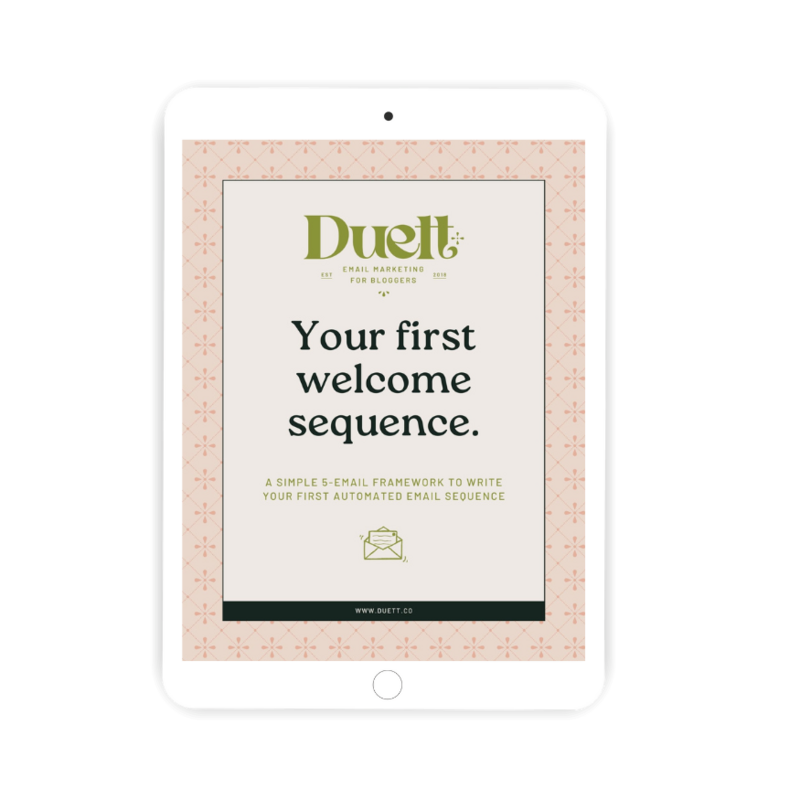
If you’re not welcoming new subscribers and pointing them in the direction of your best, most beloved content — or you feel like the one you have isn’t doing the trick — it’s time we fix that. Use this free 5-part framework to make a meaningful & lasting first impression as you write your first welcome sequence for new email subscribers!
Is Your Welcome Sequence Making a Lasting First Impression?